 What are the advantages of using ultra-thin silicon steel in axial cores
Dec 09, 2025
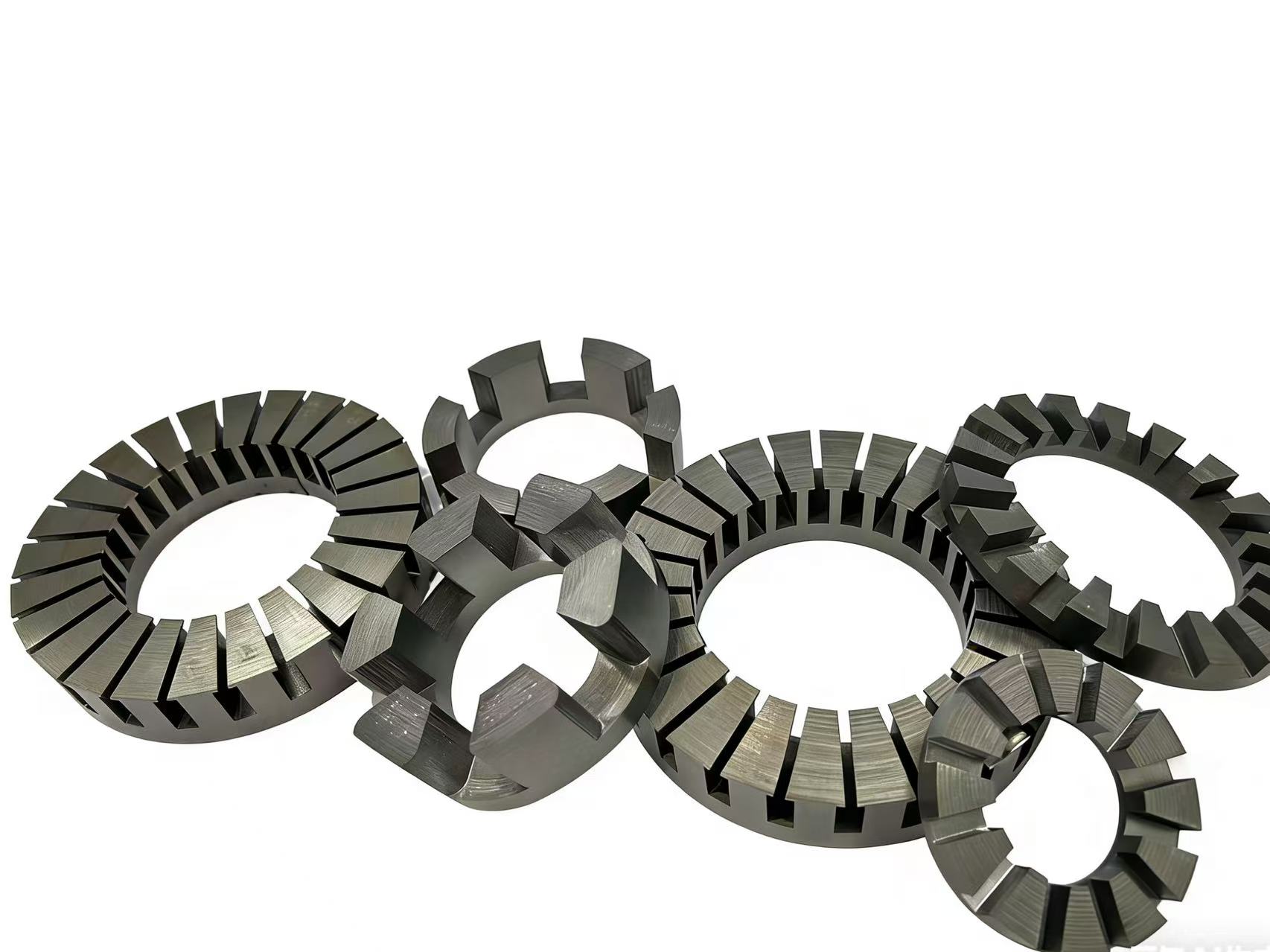
Axial cores are a special type of core used in motors or transformers, the raw material is usually silicon steel, characterized by magnetic flux (magnetic field) primarily distributed along the rotational axis or axial direction of the device. This contrasts sharply with common radial cores (where magnetic flux is distributed radially).
Compared to traditional silicon steel, the application of ultra-thin silicon steel in axial cores does indeed bring a series of significant advantages, mainly due to the improvement in its physical and electromagnetic properties. The application of ultra-thin silicon steel in axial cores is one of the key technologies for achieving high-frequency, high-efficiency, and miniaturized motors and transformers.
Advantages:
1. In terms of electromagnetic performance, ultra-thin silicon steel is applied to the axial core. Due to the extremely thin thickness of ultra-thin silicon steel, the eddy current flow path is restricted, and the loop resistance is increased. Moreover, ultra-thin silicon steel itself has a low iron loss value, which can significantly reduce iron loss (especially eddy current loss) compared with traditional silicon steel, and improve the efficiency of motors/transformers.
2. In terms of structural design, axial cores made of ultra-thin silicon steel generally use self-bonding technology. Self-bonding technology uses special adhesives to solidify the silicon steel sheets as a whole, avoiding the damage to the material caused by traditional riveting/welding.
3. In terms of thermal management, the axial core made of ultra-thin silicon steel uses self-adhesive technology, and the self-adhesive coating fills the gaps between the sheets, forming an efficient axial heat conduction path; while the low iron loss characteristics of ultra-thin silicon steel can reduce heat generation from the source.
In summary, ultra-thin silicon steel, applied to axial cores through special material processing and structural design, offers significant advantages in reducing high-frequency losses, increasing power density, optimizing heat dissipation, and improving NVH performance. This makes it highly suitable for the stringent requirements of high-efficiency, compact size, and high performance in current high-end motors and transformers.
LEE MAS




 IPv6 RED SOPORTADA
 en
en fr
fr es
es